
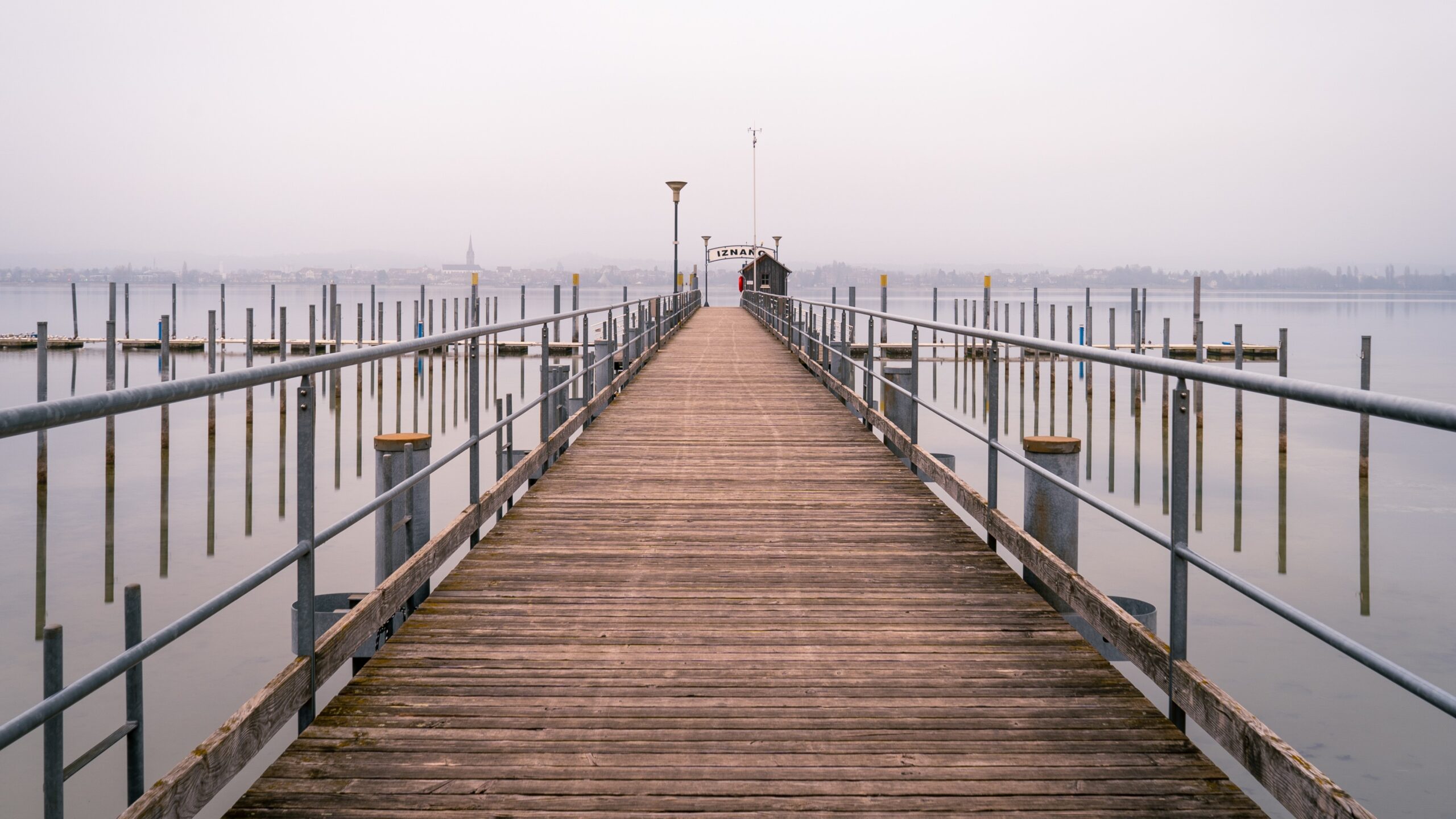
Nestled quietly on the shores of Lake Constance, the small village of Iznang offers a serene escape from the bustle of Germany’s more famous tourist destinations. Located in the municipality of Moos within the district of Konstanz, this charming lakeside settlement lies along the southern edge of the Untersee, a smaller branch of Lake Constance. Directly across the water sits the town of Radolfzell am Bodensee, giving Iznang a picturesque backdrop of historic architecture and natural beauty. Surrounded by protected wetlands, gentle hills, and quiet countryside, the village feels both remote and deeply connected to the natural rhythms of the region1. I visited here during the winter of 2025. It might not have been the best time to visit. Besides being very cold, the weather was also less than ideal. I struggled to endure the pain in my hands due to the cold. I was also a little disappointed because I couldn’t get a good photo at dusk. The background was covered in fog. If I had taken it on a clear day, the results might have been better.
The history of Iznang stretches back centuries, with its first documented mention around the year 1300 under the name “Utzenhoven.” Over time, the village evolved both linguistically and politically, eventually becoming known as Iznang. During the Middle Ages, the settlement was divided between two different authorities (one part under the control of Bohlingen and another under the Vogtei Höri), before both halves came under the authority of the Bishop of Constance in 1535. Archaeological findings suggest that the area had already been inhabited much earlier, even dating back to prehistoric times, indicating that its favorable lakeside location has long attracted human settlement. One particularly notable historical figure from Iznang is Franz Anton Mesmer, born here in 1734, who later became famous across Europe for developing the theory of “animal magnetism,” a precursor to modern psychotherapy2.
Reaching Iznang today is relatively straightforward, especially for travelers exploring southern Germany or nearby Switzerland. The village lies just a few kilometers from Radolfzell, which is well connected by train via regional railway lines. From there, visitors can continue by local bus, bicycle, or even by boat across Lake Constance, as the village features a small harbor connected to ferry routes linking destinations such as Reichenau Island and Swiss lakeside towns. For those traveling by car, Iznang can be accessed via scenic roads that run along the lake, offering breathtaking views of the water and surrounding countryside. Nearby airports such as Friedrichshafen and Zurich provide convenient entry points for international travelers, making the village surprisingly accessible despite its tranquil and secluded atmosphere3. I visited here using public transportation. First, I took the train, then connected by bus. It’s only a short walk from the bus stop to Iznang Port.
What makes Iznang truly special is not a long list of attractions, but rather the immersive experience it offers through nature, relaxation, and authentic local culture. Visitors can enjoy peaceful walks along the lakeside promenade, known as the Uferanlage, where benches overlook the shimmering water and distant towns. The area is also ideal for outdoor activities such as canoeing, cycling, and birdwatching, particularly in nearby protected nature reserves that host diverse wildlife and seasonal bird migrations. During the summer, the village comes alive with small festivals and gatherings along the waterfront, while its beach area provides a relaxing place to swim or simply enjoy the sunshine. The harbor also serves as a gateway for boat trips across the lake, allowing visitors to explore iconic destinations like Reichenau Island, a UNESCO World Heritage Site4. I came here to hunt for photos. I got a referral from social media and really liked it. Unfortunately, the photos I got weren’t very satisfying. Even so, I had quite a memorable experience. I met a local. He explained a lot. For example, he said that the side of the pier is less suitable for taking sunset photos, because it doesn’t coincide with the sunset. He also recommended other good spots for hunting photos, especially for birding. We talked a lot, because he also has a hobby of photography.
Beyond its tranquil charm, Iznang holds several unique and fascinating facts that set it apart from other villages in the region. Despite its small population. It sits within an environmentally significant area, including protected shoreline zones established as nature reserves since the 20th century. The village’s origins as a fishing settlement are still reflected in its layout and local traditions, even though tourism and recreation now play a larger role in its economy. Another interesting aspect is its cultural connection to regional festivals, such as the nearby “Büllefest,” celebrating the local onion variety known as Höri-Bülle. Perhaps most intriguing is the juxtaposition of ancient history and modern tranquility: from prehistoric settlements and medieval governance to its present-day identity as a peaceful retreat, Iznang quietly encapsulates the layered history of the Lake Constance region5. For those of you who intend to visit here, below is a map that you can use:
In the end, Iznang is not a place defined by grand landmarks or crowded tourist attractions, but by its subtle beauty, rich history, and deep connection to nature. For travelers seeking a slower pace, authentic atmosphere, and scenic landscapes, this small village on Lake Constance offers an experience that is both calming and quietly unforgettable.
- https://www.iswitzerland.net/hilite-00000000007436-en.html? ↩︎
- https://www.gaienhofen.de/poi/detail/iznang-ortsteil-von-moos-df8218a442 ↩︎
- https://nona.net/features/map/placedetail.476517/Iznang/? ↩︎
- https://www.reichenau-tourismus.de/attraktion/uferanlage-iznang-5c18eb47ca? ↩︎
- https://de.wikipedia.org/wiki/Bodenseeufer_%28Gmk._Iznang%2C_Moos%2C_B%C3%B6hringen%29 ↩︎



Leave a Reply